Vietnam 2026: The Quiet Economic Surge Nobody Saw Coming
Everyone was watching China. Nobody was watching Vietnam. That was a mistake.
For the past decade, global boardrooms, private equity firms, and economic analysts shared a singular, hyper-focused obsession: navigating the complex supply chain decoupling from China. As multinationals scrambled to implement "China + 1" strategies, the financial press monitored Mexico, mapped India, and weighed Poland.
Meanwhile, right under the world’s nose, a quiet revolution was taking place along the coastlines of Southeast Asia.
Vietnam didn’t just absorb the overflow of global manufacturing; it completely re-engineered its domestic operational infrastructure. While the world looked away, the country transformed from a low-cost manufacturing fallback into a high-velocity, white-collar execution engine.
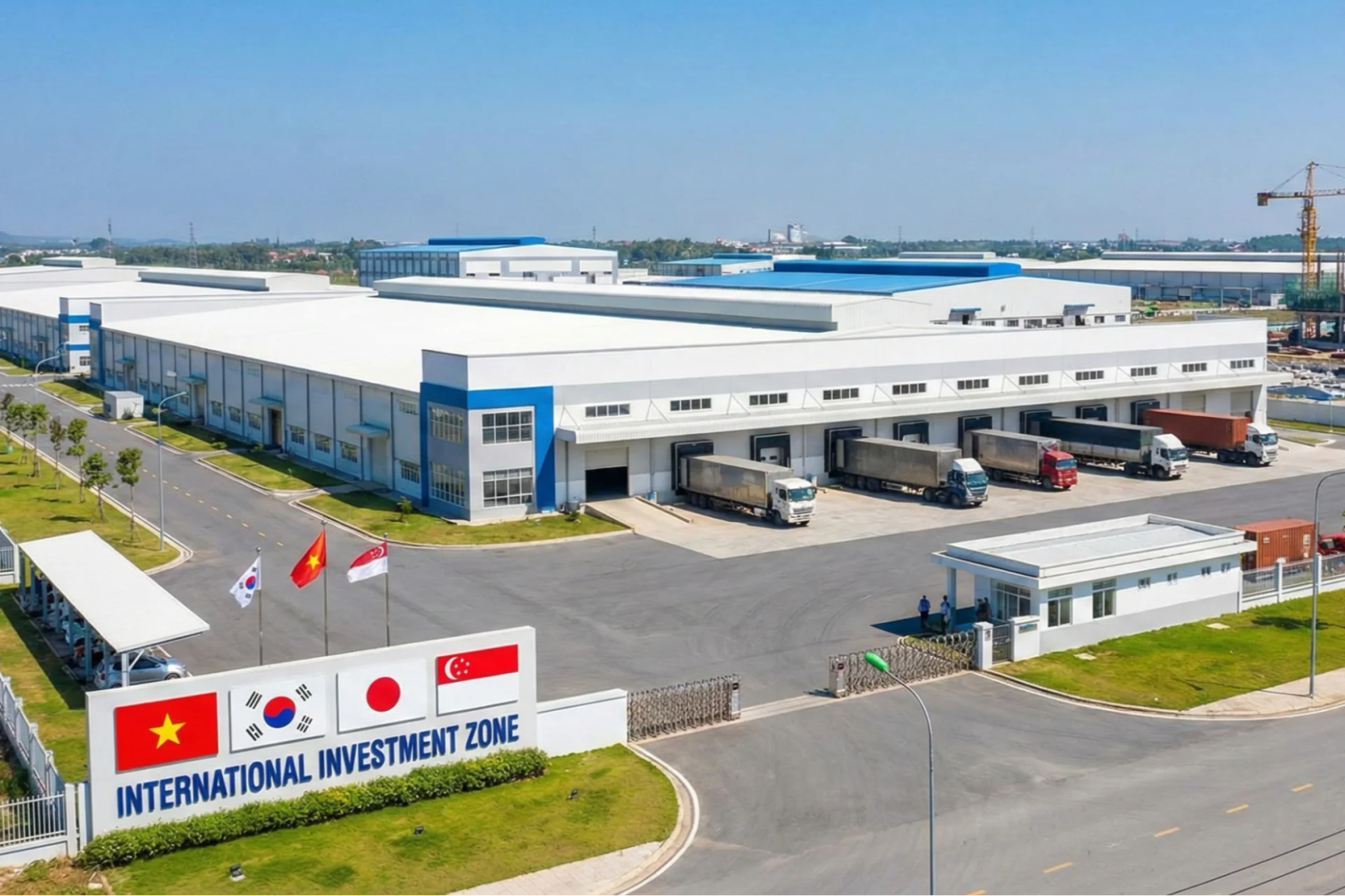
Foreign direct investment is turning into real projects, factories, and jobs.
The Country That Quietly Became One of the Fastest-Growing Economies in Asia
The transformation is no longer a speculative trend line. It is a macroeconomic reality backed by hard, unrelenting data.
1. Sustained GDP Growth (6–7% Annually)
While mature Western economies stall and regional neighbors face demographic headwinds, Vietnam’s Gross Domestic Product continues to accelerate. Following a powerful surge in 2025 that posted an 8.02% GDP growth rate, official projections for 2026 place steady economic growth within a resilient 6.0% to 7.1% range. This sustained momentum cements the nation's position as an elite growth leader in global commerce.
2. FDI Reaching Record Highs
Foreign Direct Investment isn't just trickling into the country—it is pouring in at an unprecedented velocity. In 2025, total registered FDI exceeded $38.4 billion, while actual disbursed FDI hit a historic five-year high of $27.62 billion. Moving through 2026, total registered foreign investment continues to climb, rising by 34.9% in the first five months of the year compared to the same period prior. Capital allocation platforms are shifting from hesitant trial deployments to permanent, long-term sovereign bets.
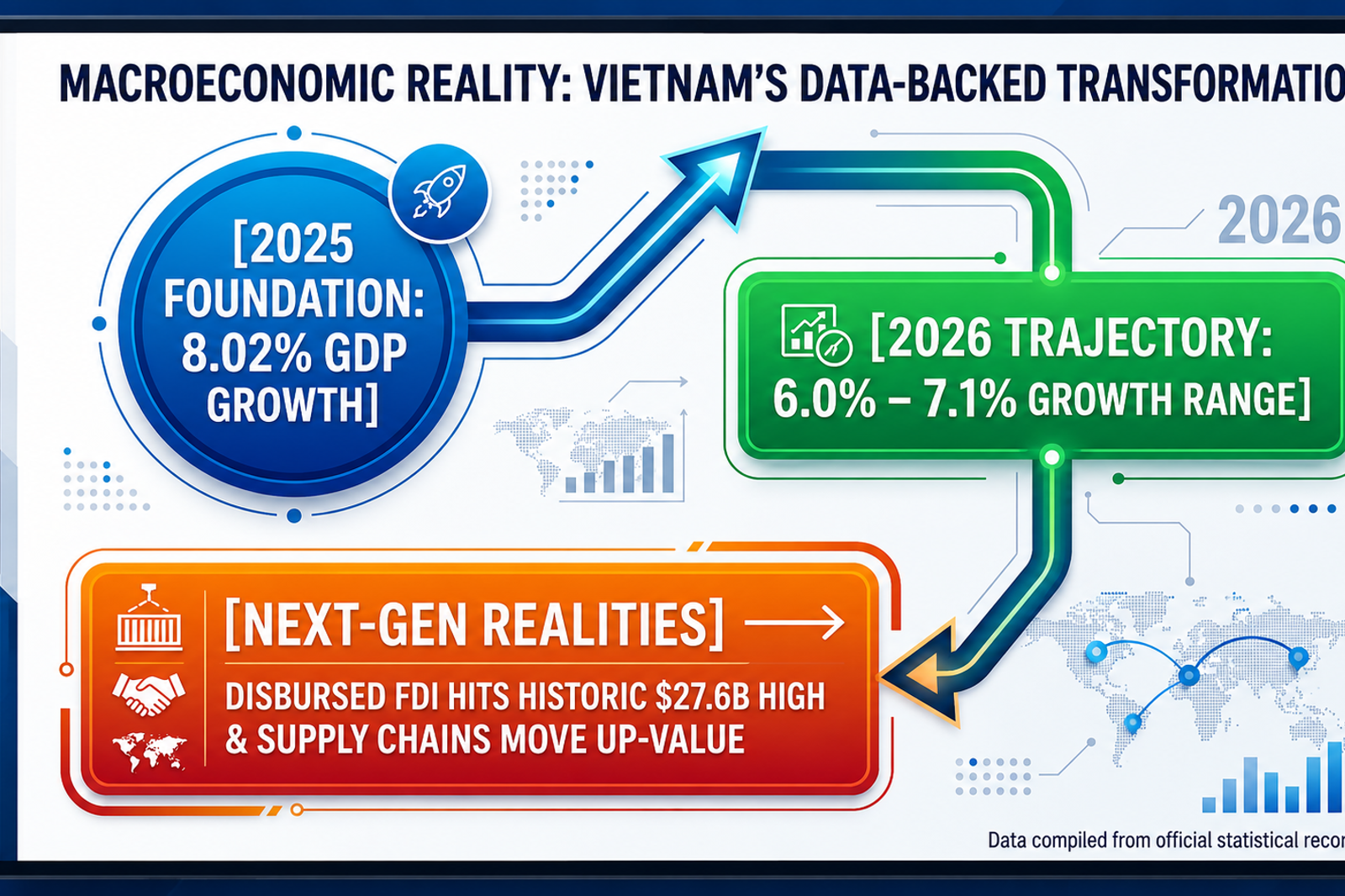
Vietnam Sustained GDP Growth (6–7% Annually) - STAFF United
3. A Dominant Share of the Global Supply Chain
Vietnam has permanently captured critical market share across high-value global manufacturing ecosystems. In 2025, its processing and manufacturing sector drove the economy forward by expanding 9.97%—its strongest performance since 2019. The country has graduated from textile production to dominate advanced electronics assembly, precision automotive components, and automated machinery lines. It is no longer an alternative node in global commerce; it has become an essential anchor point.
The Structural Advantages: Built for Velocity
Economic surges require fundamental structural scaffolding to prevent them from collapsing under their own weight. Vietnam has intentionally spent years designing a highly scalable environment tailored to modern corporate enterprise.
- A Young, Dynamic Workforce: The median age of the Vietnamese population sits at an incredibly vibrant 31 years old. This represents a massive demographic sweet spot: an entire generation of workers entering their peak productive, creative, and professional years just as regional competitors are aging out of the workforce.
- Universal Literacy and Educational Foundations: The domestic literacy rate hovers at an exceptional 97%. This foundational focus means the workforce possesses a uniform baseline of analytical capability, making technical training and cross-functional upskilling incredibly rapid.
- Rising English Fluency and Global Integration: English has aggressively become the commercial standard for the emerging professional class. From coffee shop co-working spaces to corporate suites, a massive wave of young, tech-native professionals interfaces fluently with global capital and Western administrative frameworks.
- Aggressive Digital Infrastructure Deployment: Vietnam's e-commerce and digital sectors are expanding at a rapid pace. The country is prioritizing cloud data systems, automated software pipelines, and next-generation logistics tracking. This focus ensures that physical manufacturing outputs are constantly optimized by rapid, modern digital connectivity.

Young Vietnamese professional working - STAFF United
The Cultural Parallel: Activating the Cultural OS of East Asia
Every great industrial miracle possesses a distinct, internal psychological engine that powers its execution cadence. Just as Japan activated its methodical Kaizen principles during its post-war ascent, and South Korea deployed the aggressive, military urgency of Ppalli Ppalli, Vietnam has unlocked its own deeply historical, highly resilient cultural operating system.
Unyielding Grit: Geunseong (근성) Transformed
The Korean people built their economic miracle upon a foundation of geunseong—a fierce, stubborn doggedness in the face of impossible odds. The Vietnamese workforce shares this precise psychological architecture. Decades of historical struggle, intense adaptation, and cross-generational resilience have been channeled straight into a burning collective ambition for global self-assertion. Work isn't merely viewed as a path to a transactional paycheck; it is approached as an active discipline of national advancement and personal excellence.
Collective Accountability and Pride
Within the tightly woven, collectivist fabric of Vietnamese society, execution failure is never isolated to the individual. It brings a deep sense of social responsibility toward the team, the family, and the enterprise. This intense social alignment functions as an organic, highly reliable quality control system. Teams consistently demand flawless operational execution from themselves, working long hours and mastering new skill sets with obsessive dedication simply to avoid letting down the collective group.
A Deep-Rooted Reverence for Education
Education is treated with sacred priority. Families routinely reallocate massive percentages of household income toward advanced tutoring, language mastery, and technical certifications for their children. This shared commitment creates a workforce obsessed with continuous intellectual iteration, rapid pattern recognition, and elite technical training.

A Deep-Rooted Reverence for Education - STAFF United
What's Different This Time: White-Collar Execution at Scale
The biggest mistake global observers make is viewing Vietnam solely through the lens of a blue-collar factory floor. That old mental model is completely outdated.
Through the implementation of major high-tech investment policies, the state has initiated a strategic upgrade. Capital is flowing past heavy machinery and shifting directly into semiconductors, advanced artificial intelligence design, automated supply chain management, and complex financial architecture.
The defining story of the country's development isn't manual factory labor—it is knowledge work, cross-border operations, high-end digital marketing, and complex international corporate finance.
Multinationals are no longer merely outsourcing assembly lines to provincial clusters; they are establishing full-scale regional operational headquarters in urban commercial centers. Entire ecosystems of creative directors, system administrators, automation engineers, and operational coordinators are executing end-to-end global campaigns from modern offices. This is highly sophisticated corporate execution scaled across a hyper-disciplined, digitally native generation.
The Moment We Are In: The Inflection Point
We are currently witnessing a classic economic inflection point.
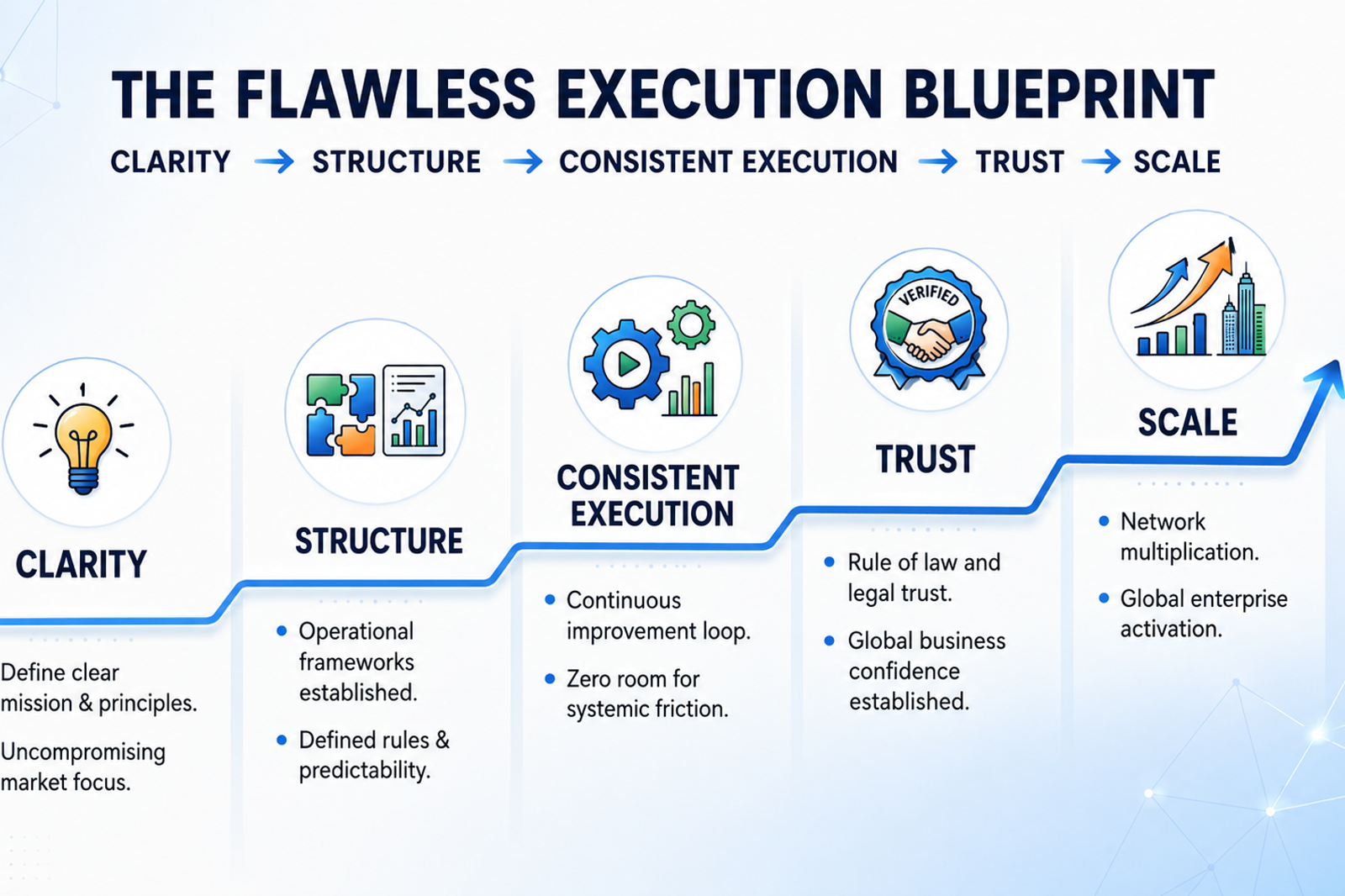
The flawless execution blueprint - STAFF United
It is a window that is still early enough for visionary organizations to build deep, foundational cross-border partnerships that secure a massive competitive advantage. Yet, it is late enough in the development loop to have all execution risk entirely removed by hard data, undeniable infrastructure uptime, and permanent global trust.
The early-stage volatility has cleared, the systemic friction has been engineered out of the environment, and the operational engine is fully online. Businesses that wait until the transition is blindingly obvious to the entire global market will find themselves priced out of the finest talent pools and locked out of critical strategic positions.
The Ultimate Operational Edge
Every economic expansion relies on a specific human engine to push it past the finish line.
In the mid-20th century, Japan rebuilt its global footprint by embedding disciplined men along methodical automotive and industrial factory lines. A generation later, South Korea captured global markets by embedding elite engineers within the hyper-centralized, military-style command structures of their family-owned Chaebols.
Vietnam’s contemporary economic expansion features an entirely different, incredibly potent secret weapon: women in high-end business operations.
Walk into any high-velocity tech office, modern logistics hub, or corporate finance headquarters across the country, and you will find the exact same pattern. The gears of daily project execution, cross-border negotiation, technological implementation, and operational scaling are overwhelmingly driven by brilliant, highly educated, and ruthlessly organized women.
They are managing international multinational pipelines, coordinating hyper-complex global product launches, and directing elite teams with clinical precision. They combine a fierce cultural work ethic with an extraordinary capacity for complex administrative logistics and strategic execution.
Japan had men in factories. Korea had engineers in Chaebols. Vietnam has something completely different: an elite army of women driving global business operations at scale.
The world wasn't watching, but the miracle is already here.
Related Insights

Uncovering the True Cost of Offshore Execution: Hourly Rates vs. Total Cost of Execution
How global operators evaluate financial transparency, eliminate hidden fees, and build predictable offshore capacity in Vietnam.
The Turnover Trap: How Disorganized SOPs Drain Your Business Continuity
Why traditional offshore models lose operational knowledge during team turnover—and how embedded process architecture protects your business.

Cultural Synergy in Global Teams: How Modern Vietnamese Professionals Master Executive Communication
How international founders overcome cultural friction, build direct feedback loops, and unlock proactive execution in Vietnam.