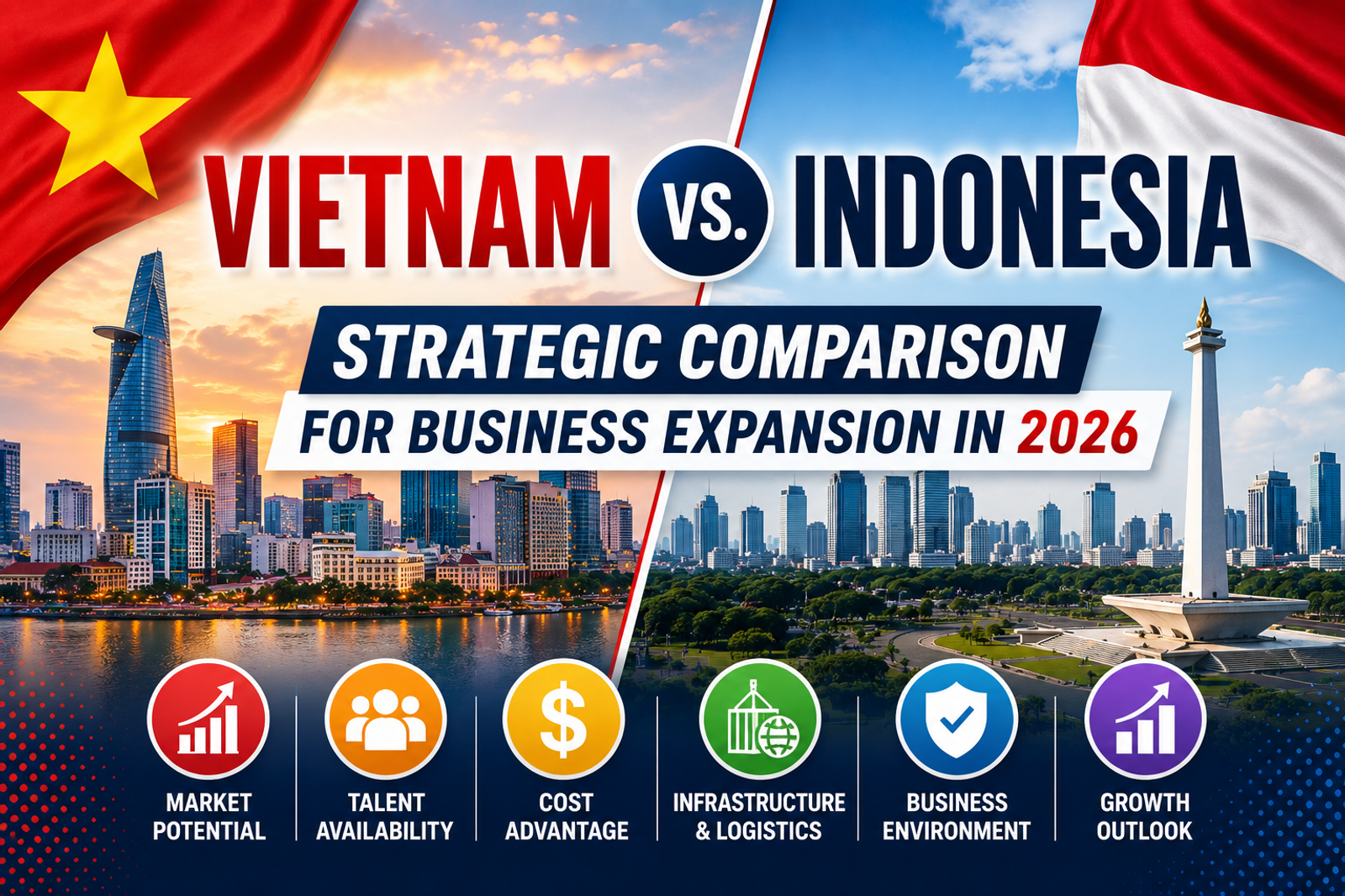
Vietnam vs. Indonesia: Strategic Comparison for Business Expansion in 2026
As global enterprises pivot toward Southeast Asia to diversify supply chains and tap into emerging consumer markets, the choice often narrows down to two regional giants: Vietnam and Indonesia. While Indonesia offers a massive internal market, Vietnam has established itself as the premier hub for technical innovation and export-driven growth.
1. Market Size and Consumer Demographics
The most immediate difference between these two nations lies in their scale and domestic focus.
- Indonesia: The Domestic Giant: With a population exceeding 280 million, Indonesia is the largest economy in Southeast Asia. It is a "market-first" destination where businesses expand primarily to sell to its growing middle class.
- Vietnam: The Export & Tech Powerhouse: While its population is smaller (approx. 100 million), Vietnam is significantly more integrated into global trade. It is the destination of choice for businesses looking to build high-performance products for the global market.

2. Technical Specialization and Talent Pool
In 2026, the nature of the workforce has become the primary battleground for business expansion.
- Engineering Depth in Vietnam: Vietnam leads the region in high-end technical R&D and frontier technologies. The workforce is built on a rigorous STEM foundation, producing over 57,000 software engineers annually from a pool of 650,000 IT professionals.
- Specialized AI Focus: Vietnam's AI sector is experiencing a staggering 147% annual growth, supported by a government-backed National AI Development Fund. Approximately 73% of Vietnamese AI developers hold advanced degrees, offering a level of technical depth that is difficult to find elsewhere in the region.
- Indonesia’s Digital Economy: Indonesia excels in consumer-tech and e-commerce, driven by its massive internal user base. However, for deep technical R&D, firms often find the talent pool more fragmented compared to Vietnam’s concentrated tech hubs.

3. Regulatory Environment and Investment Laws
Both countries have implemented reforms to attract foreign capital, but Vietnam's recent changes offer a more streamlined path for rapid setup.
- Vietnam’s "Green Channel": New 2025 investment laws allow foreign investors to establish a legal entity and begin hiring immediately, drastically reducing expansion timelines.
- Decree 101/2026/ND-CP: This specific legislation in Vietnam provides prioritized infrastructure access and tax breaks for innovation-driven firms, specifically in sectors like AI and semiconductors.
- Indonesia’s Omnibus Law: Indonesia continues to refine its regulatory framework to reduce bureaucracy, though local partnership requirements and complex land acquisition processes can still pose hurdles for fast-moving startups.
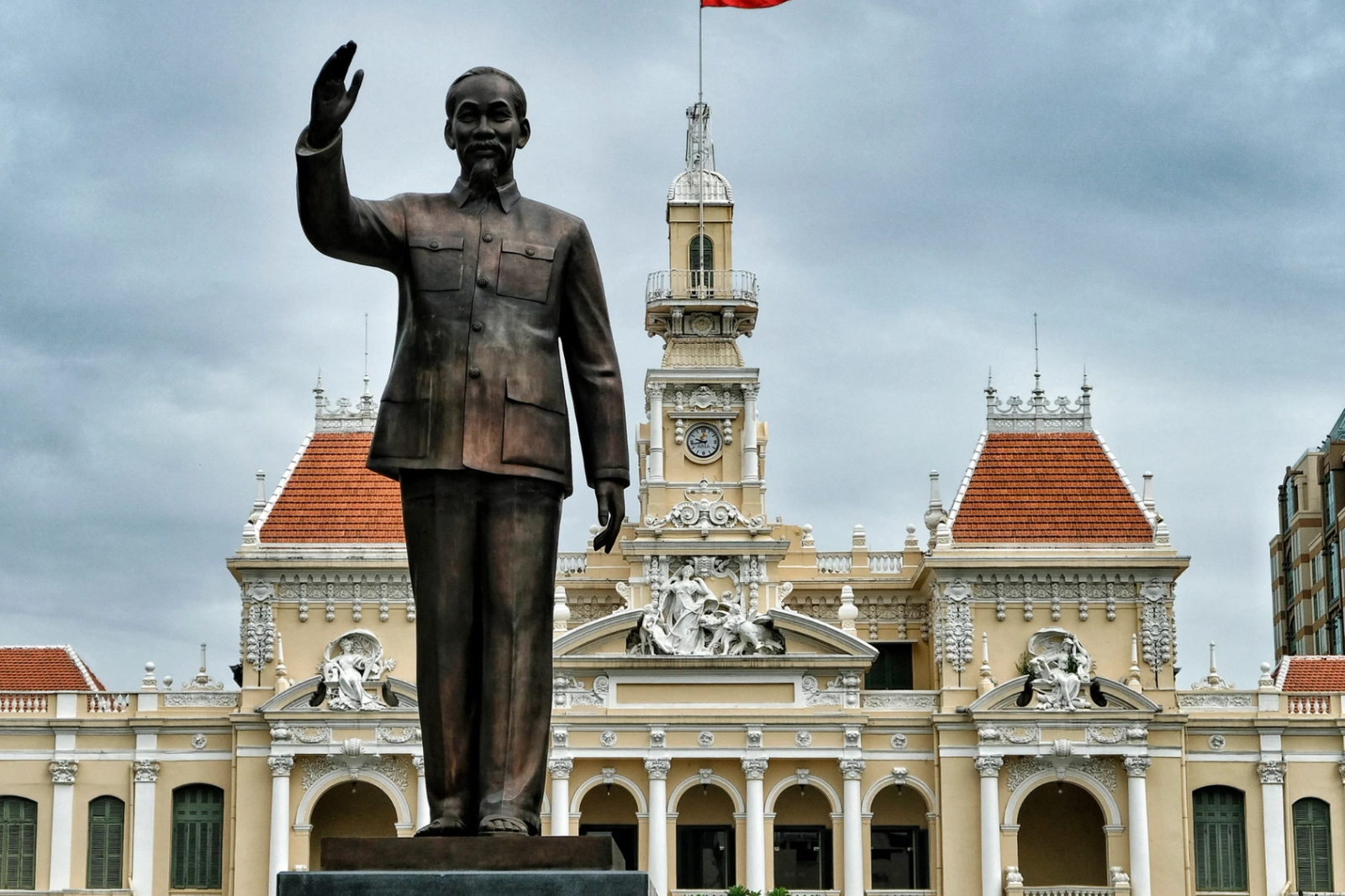
4. Operational Efficiency and Infrastructure
- Timezone Synergy: Vietnam’s GMT+7 timezone offers a unique "follow-the-sun" model for Western firms. Teams in Vietnam can test and refine code overnight, potentially increasing shipping speeds by 30–40%.
- Selective Recovery: Vietnam’s IT sector is in a "selective recovery" phase, with 69.6% of companies actively growing their teams in 2026, indicating a robust and resilient ecosystem for expansion.
Final Verdict: Where Should You Expand?
- Choose Indonesia if your primary goal is to capture a massive internal consumer market and you are prepared for a longer, more complex regulatory setup.
- Choose Vietnam if you require a high-performance technical team, deep R&D capabilities, and a streamlined regulatory path to global export and scalability.
Scaling Your Operations with STAFF United Group
Navigating the complexities of high-growth markets like Vietnam requires a partner committed to operational excellence. At STAFF United Group, we specialize in helping businesses harness the dynamic potential of the Vietnamese tech ecosystem.
We believe that true scalability is built on consistency in deliverables. Our approach focuses on building autonomous, system-managed teams that allow owners to stop being the "bottleneck." By documenting every process and prioritizing professional growth, we ensure that your expansion into Vietnam is not just a hire, but a scalable business system.
🚀 Find out the best offshore support in Vietnam: https://www.staffunitedgroup.com/services
Data Sources
- [1] Vietnam News (2026): Việt Nam's start-up market enters restructuring phase.
- [2] Second Talent (2026): Philippines vs. Vietnam vs. Indonesia: Where Should You Source Talent?
- [11] LuatVietnam (2026): National strategy on innovative start-ups and Investment Law updates.
- [14] Market Trends & Tech Sector Analysis (2026): Reports on AI adoption and growth metrics.
Related Insights

Uncovering the True Cost of Offshore Execution: Hourly Rates vs. Total Cost of Execution
How global operators evaluate financial transparency, eliminate hidden fees, and build predictable offshore capacity in Vietnam.
The Turnover Trap: How Disorganized SOPs Drain Your Business Continuity
Why traditional offshore models lose operational knowledge during team turnover—and how embedded process architecture protects your business.

Cultural Synergy in Global Teams: How Modern Vietnamese Professionals Master Executive Communication
How international founders overcome cultural friction, build direct feedback loops, and unlock proactive execution in Vietnam.